
USA, Oct 20, 2026
Every application, cloud service, and security tool in the enterprise produces a steady stream of logs, metrics, traces, and events. That telemetry is essential for day-to-day operations, modern software, infrastructure, and technology initiatives, yet as telemetry volumes grow, so too do cost and complexity.
Unfortunately, "more data" does not always mean "better data" or "better business outcomes." In fact, the opposite is often true.
In Splunk's most recent Machine Data Outlook Report, for instance, 74% of technology leaders say AI and automation have caused moderate or significant data management challenges. Despite collecting more data than ever, 53% frequently or always lack the machine data required to support AI or automated decision-making, and 56% frequently or always limit data collection because of budget or infrastructure constraints.

These findings reveal a stark divide between how much telemetry organizations collect and how much value they get from it. Without a way to prioritize, organize, and contextualize telemetry, much of that data only adds cost without improving reliability, security, or AI readiness. This means that organizations are paying to store data rarely used, while the data they actually need can be fragmented across tools or never even collected at all.
Formal observability and security practices, supported by a modern data platform, can help close that gap. These practices establish how telemetry is collected, used, and managed across teams, while the platform provides the scale to prioritize, organize, and contextualize that data across the enterprise.
The Splunk Platform provides a single, unified solution for analyzing and acting upon data across the enterprise, making it an excellent foundation for both observability and security practices.
More Telemetry Does Not Equal Better Outcomes
New applications, cloud environments, security tools, and AI workloads continuously add telemetry data, but this means that most organizations now collect more data than they can effectively use. Also, without proper context, that data can't surface the most relevant signals, relationships, or business insights. Growing telemetry volumes create challenges across the organization, including:
- Higher costs. Low-value data consumes the same ingest, storage, and licensing budget as the data teams depend on.
- More complexity. Data spread across separate IT, engineering, and security tools forces teams to search multiple systems and reconcile conflicting views.
- Slower decisions. Noisy data means noisy alerts, and teams can spend more time sorting through information than acting on it.
- Weaker AI outcomes. AI models and agents depend on governed, contextual data, and fragmented or unorganized telemetry limits their accuracy and value.
In short, without effective prioritization, organization, and context, too many resources can be spent wrestling with data instead of using it.
One way to turn the tide is by adopting formal observability and security practices, enabled by a modern data platform.
How Observability and Security Practices Bring Focus to Telemetry
Formal observability and security practices give organizations shared goals, clear ownership, and defined measures of success for their telemetry. They identify the organization's critical services, risks, and business outcomes, along with the data that supports each one. According to Splunk's State of Observability 2025, leading observability practices generate 53% higher return on their observability investments than their peers and are nearly twice as likely to say observability significantly improves revenue, employee productivity, and product roadmaps.
With formal practices in place, organizations can:
- Prioritize telemetry by business value. Tie data to critical services, service-level objectives, and security risks, so high-value data receives premium treatment and the rest is filtered, aggregated, or retained at lower cost.
- Consolidate data across teams. Observability and security draw on much of the same telemetry, and coordinating the two practices reduces duplicate collection and disconnected tools.
- Add context to every signal. Connecting performance, network, and security data shows whether an anomaly is an operational issue or a threat, and how it affects the business.
- Prepare data for AI. Governed, well-defined telemetry gives AI models and agents the reliable context they need to deliver accurate results.
These practices give every team a shared framework for how telemetry is prioritized, organized, and used. To scale across the enterprise, observability and security practices must be built on a platform that can prioritize, organize, and contextualize data across every domain.
Unifying Observability and Security Data with Splunk
Prioritizing, organizing, and contextualizing telemetry at enterprise scale requires a platform that can work with data across the organization. The Splunk Platform does just that, while giving teams the ability to search, analyze, visualize, and act on any type of telemetry.
Teams can search and investigate telemetry across sources, analyze it with monitoring, alerting, and reporting, and visualize it through custom dashboards accessible from anywhere. Those insights then fuel faster, more confident decisions across IT, security, and the broader business.
Splunk offers:
- Machine learning and AI. Improves security and business outcomes by bringing machine-level intelligence to data.
- Data streaming. Collects, processes, and distributes telemetry data to Splunk and other destinations in milliseconds.
- Federated search and analytics. Triggers and correlates searches across Splunk and external stores, to treat, route, govern, and retain telemetry based on value and use.
- Scalable index. Collects and ingests data from thousands of sources.
- Powerful dashboards. Complex data stories communicate concepts clearly to technical and business stakeholders alike.
- Collaborative tools. Enables teams to interact with data and collaborate from anywhere via mobile, TV, and augmented reality.
Splunk Cloud Platform is available as a self-managed enterprise deployment or on demand, as a scalable, cloud-based service. Both deployments offer advanced data management capabilities and can be used as a foundation for modern observability and security practices.
Make Telemetry Work Harder with Logicalis and Splunk
Telemetry data improves outcomes when organizations can prioritize, organize, and contextualize it. Formal observability and security practices, supported by solutions such as the Splunk Platform, give teams more control over telemetry data and costs, while delivering faster, clearer answers.
Logicalis Managed and Professional Services teams help organizations assess current telemetry, design observability and security practices, and deploy the Splunk Platform, with ongoing support and optimization as data volumes grow.
Contact Logicalis today to learn how we can help make your enterprise telemetry work harder.
Related Insights

USA , Oct 14, 2026
Your VMware Environment Is Already Running the Business. Could It Be Running Your AI?
Enterprise AI doesn’t have to mean adding more complexity. For organizations already running VMware, existing infrastructure can provide a secure, governed, and efficient foundation for AI while helping maximize data and GPU investments. Read the blog to discover how you can run your business and AI on one foundation.

USA , Jun 25, 2026
AI RMF Compliance and Operational Resilience: Preparing for Unexpected AI Risk
Learn how AI RMF compliance combined with operational resilience can enable organizations to proactively detect, manage, and respond to unpredictable AI risks, ensuring reliable performance, coordinated response, and sustained trust under changing conditions.

USA , Jun 18, 2026
Why Knowing When to Turn AI Off Matters
Learn why knowing when to retire an AI system is the ultimate sign of governance maturity.

USA , Jun 12, 2026
Microsoft E7 Explained: Security, AI, and Compliance in One License
See why, despite the higher price point, E7 may actually deliver better value and better economics.

USA , Jun 11, 2026
AI RMF Compliance and Insurance Readiness: How AI Risk Shapes Liability, Coverage, and Cost
AI risk is now shaping insurance decisions, as underwriters assess how organizations govern and control AI. Learn how aligning with the NIST AI RMF can reduce uncertainty and impact liability, coverage, and premiums.

USA , Jun 4, 2026
Aligning AI Risk With The Frameworks Your Organization Already Uses
Discover how aligning AI risk with enterprise processes drives sustainable, audit-ready governance—read more.

USA , May 28, 2026
AI RMF Compliance and Data Provenance: Why Understanding Data Origins Matters
Why does data provenance matter for AI RMF compliance? Learn how data origins, lineage, and governance impact risk, accountability, and performance—read the full blog to strengthen your AI strategy.

USA , May 21, 2026
AI Governance and Procurement Decisions: Why Buying AI Is a Governance Decision, Not Just a Technical One
AI governance starts at procurement—not deployment. In this blog post, learn how early vendor choices shape transparency, risk, and flexibility, making proactive governance essential from the outset.

USA , May 19, 2026
How Microsoft Security Copilot and Defender XDR Are Redefining Cyber Defense in 2026
The Threat Landscape Has Changed. Has Your Security Strategy?

USA , May 14, 2026
AI RMF Compliance and Risk Appetite: Why Defining Acceptable AI Risk Changes Governance
Learn how to translate your high-level governance framework into operational thresholds.

USA , May 7, 2026
AI RMF Compliance and AI Red Teaming: Finding What Your Model Will Hide
Discover how AI red teaming reveals hidden risks and turns NIST AI RMF compliance into a competitive advantage through real-world testing.

USA , Apr 30, 2026
AI RMF Compliance and the Decisions Most Organizations Avoid Until They Have To
In this post, Logicalis explains how the NIST AI Risk Management Framework helps organizations address accountability, oversight, and governance gaps before AI risks escalate.

USA , Apr 23, 2026
AI Governance and Organizational Change: Why Structure Matters More Than Policy
Most AI governance failures don’t happen because people break the rules. They happen because the organization evolves—and governance doesn’t. In this blog, we break down why the best governance frameworks mimic how work actually happens—not just how it looks on paper.

USA , Apr 22, 2026
Has AI reduced the human risk in Cybersecurity, or multiplied It?
AI is meant to reduce human error in cybersecurity—but is it actually increasing human risk? In this post, Phil Tobolski explores how AI-enabled threats are shifting attack strategies from exploiting technology to targeting trust, context, and human judgment.

USA , Apr 21, 2026
The Modern Workplace Revolution
How Microsoft Copilot Is Changing the Way We Work

USA , Apr 1, 2026
AI Risk Management Framework Compliance and Risk Appetite
Learn how AI RMF compliance is not about eliminating risk, but managing it intentionally. Logicalis can help.

Australia , Dec 1, 2025
IT Infrastructure As A Service (IaaS): Why Enterprises Are Making The Shift
Enterprises today face growing pressure to innovate faster, scale operations and deliver more value while managing costs. Traditional on-premises systems often hold them back, creating challenges around maintenance, hardware limitations and long deployment cycles.
USA , Oct 22, 2025
Why 91% of Enterprises Waste Money in the Cloud (and How to Fix It)
Discover how Infrastructure as Code and the Logicalis + HashiCorp + IBM partnership can help you reclaim control, reduce risk, and unlock cloud agility—read the full blog post now.
USA , Oct 15, 2025
Paving a Path to a More Secure Workplace
Microsoft’s Secure Future Initiative and integrated tools such as Defender XDR and Security Copilot offer a unified defense against modern cyber risks. Dive into the full blog to explore how Logicalis and Microsoft are paving the way to a more secure workplace.

Australia , Oct 15, 2025
AI-driven IT Operations
The world of IT has changed. Are you still running a reactive organisation, spending more time fighting fires than driving innovation? In today's exponentially complex digital environments, traditional IT management can no longer keep pace with the speed of digital transformation. The good news? You don't have to go it alone.
USA , Oct 9, 2025
Why Your Hybrid Cloud Strategy Needs a Unified Tech Stack
A successful hybrid cloud strategy demands a unified tech stack that eliminates silos and boosts innovation across the enterprise. Dive into the full blog to explore how Logicalis and IBM can transform your hybrid cloud strategy.

USA , Oct 3, 2025
AI Readiness: Is Your Security and Infrastructure Up to the Task?
Is your organization truly ready for AI? Read this blog and discover how security, governance, and infrastructure can make or break your success.

USA , Sep 11, 2025
LogicalisOne: As-Needed, Outcome-Based Services to Ease Your IT Transformation Journey
Read this blog post to learn how LogicalisOne gives you one contract to provide as many services as you need, when you need them.

Australia , Sep 11, 2025
How AI & Automation Are Transforming IT Operations
With the digital revolution fully transforming businesses, IT teams are under immense pressure to keep systems running smoothly, securely and efficiently. Enter AI in IT operations and IT process automation, technologies that are revolutionising the way organisations manage their IT landscapes. In this blog post, we’ll explore the current challenges IT teams face and how AI and automation are reshaping the future of IT operations.
USA , Sep 3, 2025
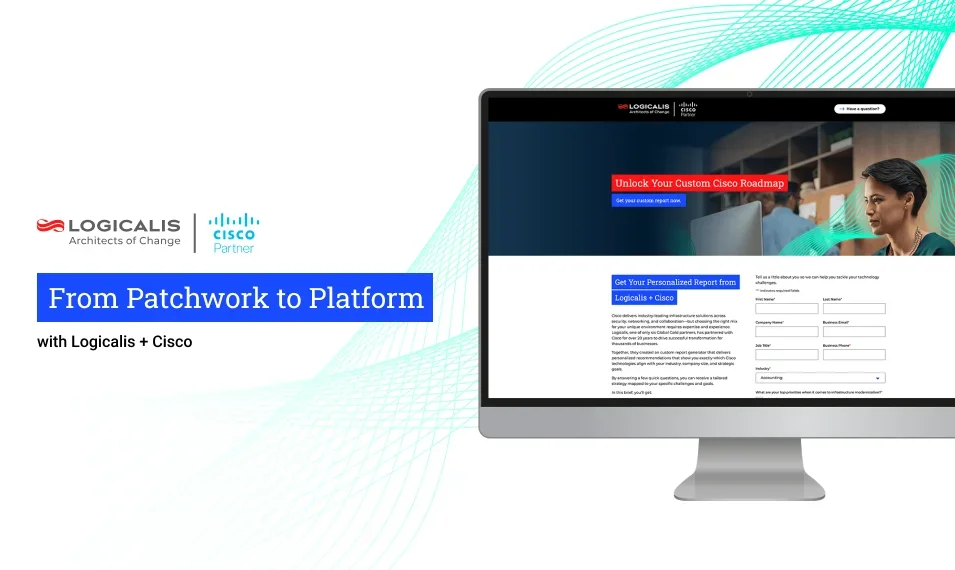
From Patchwork to Platform: How to Unify Infrastructure with Logicalis + Cisco
Production bottlenecks, skill deficits, and firefighting are just a few problems that emerge as this infrastructure "patchwork" grows more and more complex. Read this blog post to learn how Logicalis and Cisco have partnered to transform this patchwork into a unified digital fabric.
USA , Aug 18, 2025
Reflections from HPE Discover 2025: Hybrid IT Meets Your AI Ambitions
HPE is building the hybrid infrastructure which enables you to deploy AI and transform operations. This was the overall theme of this year’s HPE Discover. Read this blog to learn how HPE is redefining infrastructure to power the AI era.

USA , Jul 24, 2025
With Enterprise Storage, "Status Quo" Isn’t Enough
By consolidating silos and automating day-to-day operations, the right storage platform can help IT teams shift their focus from tedious maintenance and management to fueling innovation. Read on to see how Logicalis + Dell PowerStore can make that shift a reality.

USA , Jul 16, 2025
Cisco Live: Building Out Data Center Capacity for the Agentic AI Era
Read this post and learn how Logicalis+Cisco have embedded new AI enhancements to help your organization derive real value from next-generation networks, security, observability, and collaboration.
USA , May 29, 2025
Fortify Your Data Security with Microsoft Purview and Logicalis
With Microsoft Purview, organizations can fortify their data security with an integrated approach that helps prevent data loss, protect information, and manage inside risk.
USA , Dec 30, 2024
Move to the Cloud with Confidence
Organizations have never had a more compelling case for cloud migration, but what’s the right path forward? Microsoft Azure offers a proven solution.
USA , Dec 27, 2024
Securing the Digital Workplace
Cyberthreats grow more dangerous by the day, and organizations are struggling to keep up. Managed Extended Detection and Response (MXDR) tackles the problem with a combination of advanced tech and expert support.
USA , Dec 20, 2024
Unlocking AI-Driven Productivity in the Digital Workplace
Smarter workflows, faster access to information, and more focused, energized teams are all within reach. Here’s how businesses can harness the power of AI and overcome the challenges of adoption.
USA , Nov 6, 2024
Logicalis renews Microsoft Global Azure Expert MSP status, validating the highest possible standard of managed cloud services.
This accolade not only showcases Logicalis’ in-depth knowledge and proficiency in deploying, managing, and optimizing Azure-based solutions but also emphasizes our ability to deliver transformative outcomes for clients.
USA , Sep 11, 2024
Logicalis scales to new heights with Microsoft in FY24
With awards season behind us and an outstanding year of growth, customer outcomes and new capabilities, Logicalis has received significant recognition for our outstanding partnership with Microsoft in FY24.
USA , Sep 9, 2024
Circular logic –Why IT leaders need to embrace circularity for sustainable IT
IT leaders have a unique opportunity to drive substantial reductions in their organization’s carbon footprint while also realizing significant cost savings.
USA , Jul 26, 2024
Elevate Your Security Game: The Future Beyond Traditional VPNs
In the evolving landscape of cloud operations, a significant shift is underway: businesses are moving away from traditional VPN connections for end users. But why?
USA , Jul 2, 2024
Top Five Takeaways from HPE Discover
Logicalis and our clients immersed themselves in a wealth of knowledge and innovative solutions from HPE, sparking new ideas for implementation in our own environments. Here are the key takeaways from the event.
USA , Jun 25, 2024
Unlocking the full Potential of Data & AI with Logicalis, Kumulus, and Microsoft Fabric
To help data teams tackle these challenges, Logicalis has developed a solution with Microsoft Fabric to rapidly put data in the hands of the business teams, help unify data estates, generate more real-time visuals, and foster a data culture to scale value creation across the business.
USA , Jun 11, 2024
Recap of EBC Learnings
Over three days, our clients explored topics related to data and networking and learned about HPE technology solutions directly from the Logicalis and HPE subject matter experts. Keep reading for an in-depth recap of everything that was covered at the latest Logicalis and HPE executive briefing.
USA , Apr 18, 2024
A decade of insight reveals the future of tech leadership in the Logicalis Global CIO Report 2024
In the ever-changing landscape of tech leadership, we like to think of the Logicalis CIO Report as a steadfast guide, reflecting the pulse of change in the industry.
USA , Apr 10, 2024
Forrester Weighs in on the Benefits of Fortinet NGFW for Data Center and AI-Powered FortiGuard Security Services Solution
According to Forrester research, security decision-makers are implementing and expanding next-gen firewalls more than any other on-prem security service.
USA , Feb 2, 2024
In the Era of The Hyper-Distributed Enterprise, Organizations Realize the Strategic Value of Trusted Partners in Re-Architecting Network and Security Strategies
It’s a dynamic and exciting time in the enterprise networking industry. Change is afoot as organizations look to graduate beyond facilitating individual digital-business use cases to efficiently running a digital business at scale.
USA , Jan 22, 2024
How Private 5G Networks Can Unlock Enterprise App Potential and Accelerate Transformation
What drives enterprise application success? A straightforward question, with a not-so-obvious answer. Given that most enterprise app deployments today are driven by a specific outcome or value-based goal, it becomes easy to measure the impact on operational or business value once the project is completed. However, the harder question to answer is how does an organization go about achieving the best possible outcome?
USA , Jan 19, 2024
Navigating Future Networks with Intelligent Connectivity from Logicalis and Cisco
To help our customers simplify the complexity of networking and transformation, Logicalis partnered with Cisco to offer Intelligent Connectivity, a suite of managed solutions that include: Private 5G, SD-WAN, SASE and SSE .

USA , Dec 20, 2023
Logicalis named 2023 Cisco Global Enterprise Networking and Meraki Partner of the Year for the second consecutive year
As one of only six Cisco Global Gold Certified Partners, Logicalis is honored to receive this award for demonstrating innovation, driving engagement, and delivering greater value for our customers and communities, for a second year running.
USA , Dec 6, 2023
NetApp INSIGHT 2023: Top Takeaways and Announcements
From October the 23rd to the 25th, 2023, NetApp INSIGHT® brought together customers, partners, and the broader NetApp ecosystem in one place to network, learn about tech trends, explore NetApp’s latest products, and have fun.
USA , Dec 5, 2023
Logicalis named inaugural 2023 Cisco Global Sustainability Partner of the Year
This prestigious accolade acknowledges Logicalis’ exceptional sustainability achievements and success in helping customers reduce the environmental impact of their digital ecosystems across the globe.
USA , Dec 5, 2023
Logicalis’ Intelligent Connectivity solution now Powered by Cisco
Logicalis achieves the Cisco Powered validated service for Secure Access Service Edge (SASE) and SD-WAN status. This status means Logicalis is the only global gold partner that can deliver a managed SASE service to customers anywhere in the world!

USA , Nov 17, 2023
Why Private Wireless Networks? How LTE/5G Revolutionizes Industries
Wi-Fi or private LTE/5G? One isn’t a replacement for the other. Instead, think about which technology best addresses your business requirements.
USA , Aug 10, 2023
Modernizing Data Center Storage with NetApp AFF C-Series
To keep footprints and costs as small as possible, many IT and business leaders are shifting away from traditional storage media, towards modern solutions that are more compact, affordable, and energy efficient.
USA , Apr 20, 2023
4 Common Use Cases for Private 5G as a Service
Use cases for private 5G are growing, particularly outdoors/remote areas where Wi-Fi and public networks aren’t available. Read about 4 common use cases.
USA , Mar 22, 2023
Logicalis CloudCentralis: Your One-Stop Shop for Microsoft License Management
We are excited to announce the launch of Logicalis CloudCentralis, a one-stop platform for managing Microsoft licensing for Azure and Microsoft 365 products.

USA , Jan 25, 2023
Cybersecurity 101: Why SMBs Need MSPs in 2023
Many SMBs have outside managed services providers or MSPs. Why? 92% of IT leaders say that outsourcing better protects against cybersecurity incidents.


USA , Mar 30, 2021
How Our Military Employee Resource Group Supports Veterans
Logicalis’ Military Personnel Employee Resource Group (MPERG) helps us recruit, develop, and retain our veteran employees. Hear from our military employees.

USA , Nov 12, 2020
Cisco Recognizes Logicalis with Four 2020 Partner Awards
Cisco honors Logicalis, a Cisco Global Gold partner, with 4 awards for its innovation, leadership, and best practice as a Cisco business partner. Read article

USA , Jun 4, 2019
What is a Common Security Framework? (Updated for 2019)
There are a variety of frameworks in use today and we will look at a few in a minute. Choosing the right framework can be challenging with so many available options covering different priorities, vertical markets, and levels of complexity.

USA , Jan 4, 2019
Cloud Right vs. Cloud First: An “Eyes Wide Open” Approach
Having the right hybrid cloud strategy will keep your organization from investing in unnecessary risk and cost. Read the IDG-sponsored hybrid cloud white paper.

USA , Apr 7, 2017
What is a Common Security Framework (CSF)?
Common Security Frameworks were developed to address both issues – covering a wide area of security considerations across the entire enterprise. Here are some of the more common examples in use today.

USA , Oct 4, 2016
Integrated Collaboration: What is it, and why do I need it?
The Integrated Collaboration layer of our Collaborative Enterprise triangle consists of the following components; Mobility, Video, and Contact Center. Together they bring people in your world together and act as a robust system for the modern IT environment.

USA , Nov 13, 2013
4 major reasons some organizations are still reluctant to move to the cloud
In a world where computing is nearly synonymous with cloud, why is this 10% so hesitant to change? Our team came up with a few possible explanations.